Why the Right Small Business Start Up Accountant Can Make or Break Your Launch
Finding the right small business start up accountant is one of the most important decisions you’ll make as a founder and one of the most overlooked.
Here’s a quick answer if you’re short on time:
The best startup accountants typically offer:
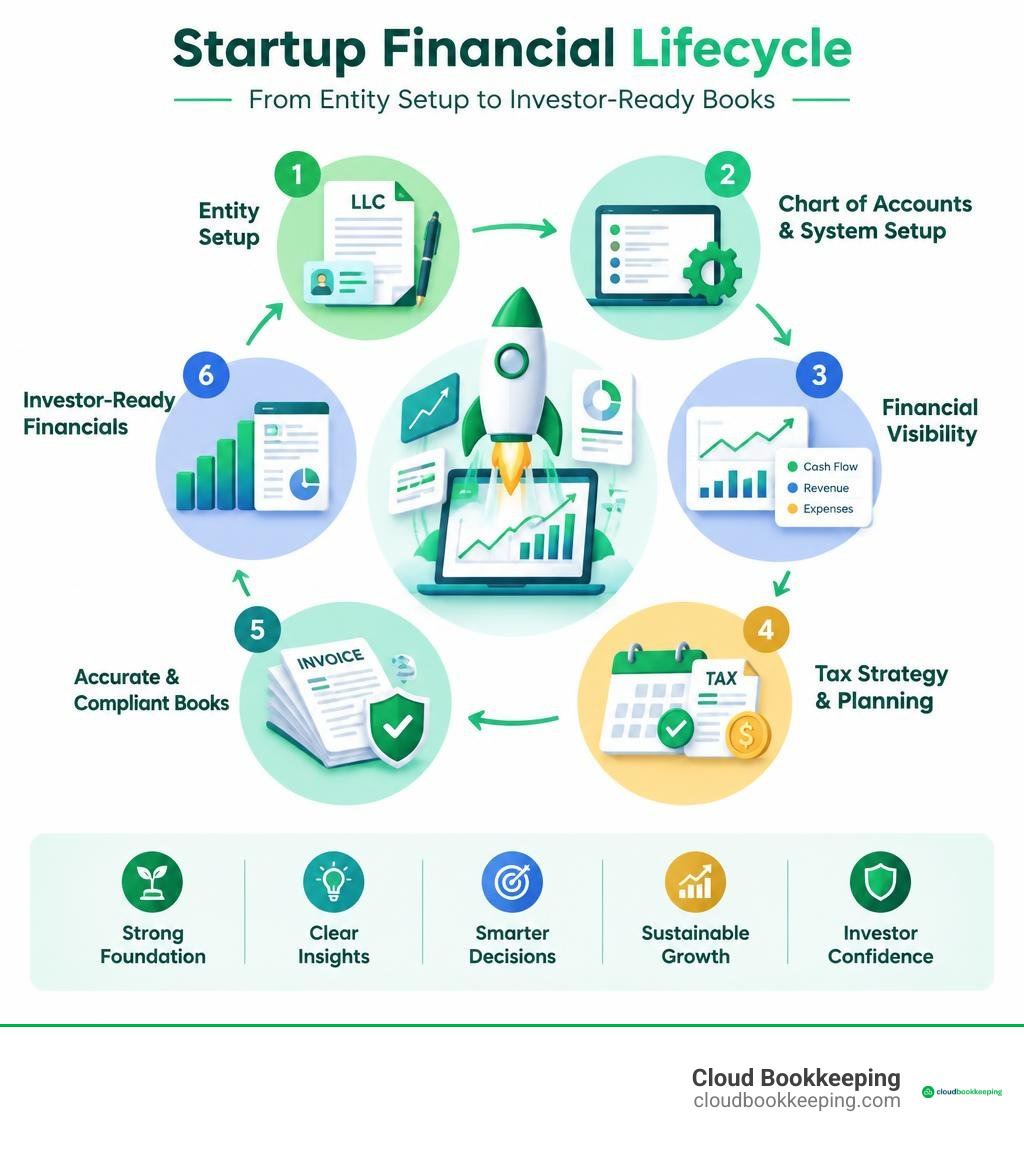
- Clean books from day one: proper setup of your chart of accounts, EIN, and entity structure
- Tax minimization strategies: S-Corp elections, R&D credits, and quarterly estimated tax planning
- Cash flow visibility: so you’re never caught off guard, even when sales look strong
- Investor-ready financials: organized, accurate records that hold up under due diligence
- Year-round support: not just a scramble at tax time
A good rule of thumb: budget 2–5% of annual revenue for accounting services.
Think about this: 3 out of 10 business owners have made a tax error. For a startup already stretched thin on time and cash, a single filing mistake can cost thousands or trigger an IRS notice at the worst possible moment.
The early months of your business are when financial habits get formed. Set them up wrong, and you’ll spend years cleaning up the mess. Set them up right, and your books become a tool that actually helps you grow.
That’s exactly what this guide is about, helping you find the right financial partner, not just a number cruncher.
I’m Charlie Perrin, founder of Cloud Bookkeeping, with over 24 years of experience helping small business start up accountants and their clients build smarter financial systems from the ground up. I’ll walk you through everything you need to know to find, vet, and work with the right accounting partner for your startup.
When to Move Beyond DIY Software and Hire a Small Business Start Up Accountant

Every entrepreneur starts with a DIY spirit. In the early days, you are the CEO, the salesperson, the customer support team, and yes, the bookkeeper. You might log into QuickBooks Online, connect your business bank account, and think, “I’ve got this.”
But there is a massive difference between entering transactions and actually managing your financial health.
As your startup begins to scale, DIY bookkeeping quickly turns into a liability. Many founders find themselves staring at spreadsheets late on a Sunday night, wondering why their bank balance doesn’t match their profit and loss statement. At that stage, learning how to simplify operations can help, but hiring a bookkeeper often makes sense before problems get out of hand.
Here are the clear warning signs that you have outgrown DIY software and need to partner with a specialized small business start up accountant:
- The “Profitable on Paper” Paradox: Your sales are climbing, and your dashboard says you are making money, but your bank account is constantly empty. This is a classic cash flow bottleneck that software alone cannot solve.
- The Shoebox Scramble: Your receipts are scattered across email folders, physical drawers, and digital notes. Using shoebox-to-spreadsheet tips is a great first step, but you eventually need a system that categorizes these automatically and accurately.
- Fear of Tax Errors: With 30% of business owners admitting to making costly tax errors, doing your own taxes without professional oversight is like walking a tightrope without a net.
- Founder Bottleneck: If you are spending 10 to 15 hours a month reconciling accounts and trying to figure out multi-state sales tax compliance, you are not spending that time growing your business.
Software is a tool, not a strategy. It will happily let you categorize a personal lunch as a business expense or misclassify a major asset as a simple expense. A human expert, however, provides the guardrails that keep your business compliant and financially healthy.
Bookkeeper vs. Accountant vs. CPA: What is the Difference?
Before you start searching for small business start up accountants, it is crucial to understand who does what in the financial world. Hiring a CPA to do basic data entry is an expensive mistake; expecting a basic bookkeeper to represent you in an IRS audit is an impossible request.
| Role | Core Responsibilities | Best For | IRS Representation? |
|---|---|---|---|
| Bookkeeper | Daily transactions, bank reconciliations, payroll, invoicing, and keeping the ledger balanced. | Maintaining clean, organized, real-time financial records. | No |
| Accountant | Financial analysis, preparing financial statements, budgeting, and mid-year tax planning. | Understanding the story behind your numbers and preparing for growth. | No (Unless they hold specialized credentials) |
| CPA (Certified Public Accountant) | Advanced tax strategy, corporate structuring, official audits, and formal tax filings. | High-level compliance, complex tax minimization, and investor due diligence. | Yes (Full legal authority to represent you) |
Understanding bookkeeping vs. accounting is the key to building an affordable, highly efficient financial team.
In fact, you do not always have to choose one over the other. Most successful startups benefit from both roles working in tandem. Your bookkeeper keeps the engine running smoothly every single day, while your accountant or CPA steps in to steer the ship during tax season or major growth milestones.
How to Vet and Choose Tech-Forward Financial Partners
If your accountant’s preferred tech stack involves a physical filing cabinet and a desktop version of software from 2012, run. Modern startups require modern, cloud-based financial partners.
When vetting a potential partner, look for someone who embraces cloud integrations and automated workflows. Your financial data should sync seamlessly between your bank, your payroll provider, your invoicing software, and your accounting platform. This real-time synchronization ensures you always have an accurate picture of your cash runway.
Data security is another non-negotiable factor. Ask potential partners where your bookkeeping is actually being done. Some firms outsource their data entry to overseas contractors to cut costs, which can expose your sensitive financial information to varying security standards. Working with a team that handles your books locally ensures direct oversight and tighter data security.
For startups in our region, partnering with local experts who understand the Texas business landscape is a massive advantage. Local professionals are deeply familiar with Bexar County business personal property taxes and Texas state tax requirements. Working with a local team ensures you stay compliant with regional regulations while building a scalable financial foundation.
Essential Qualifications for Small Business Start Up Accountants
As you narrow down your search, look for these key qualifications:
- CPA or EA Status: Ensure the firm has licensed Certified Public Accountants or Enrolled Agents (EAs) who can legally represent you before the IRS if needed.
- Tech Stack Proficiency: They should be certified QuickBooks ProAdvisors or experts in modern cloud accounting platforms.
- Startup-Specific Experience: A traditional retail accountant might not understand SaaS metrics, recurring revenue recognition, or venture capital requirements. If you are planning a rapid regional scale-up, you need a partner who can handle tech-focused equity structures and complex tax planning.
Taking time to explore bookkeeping options for your startup can protect your equity, your sanity, and your hard-earned cash from day one.
The Strategic Services Provided by Small Business Start Up Accountants
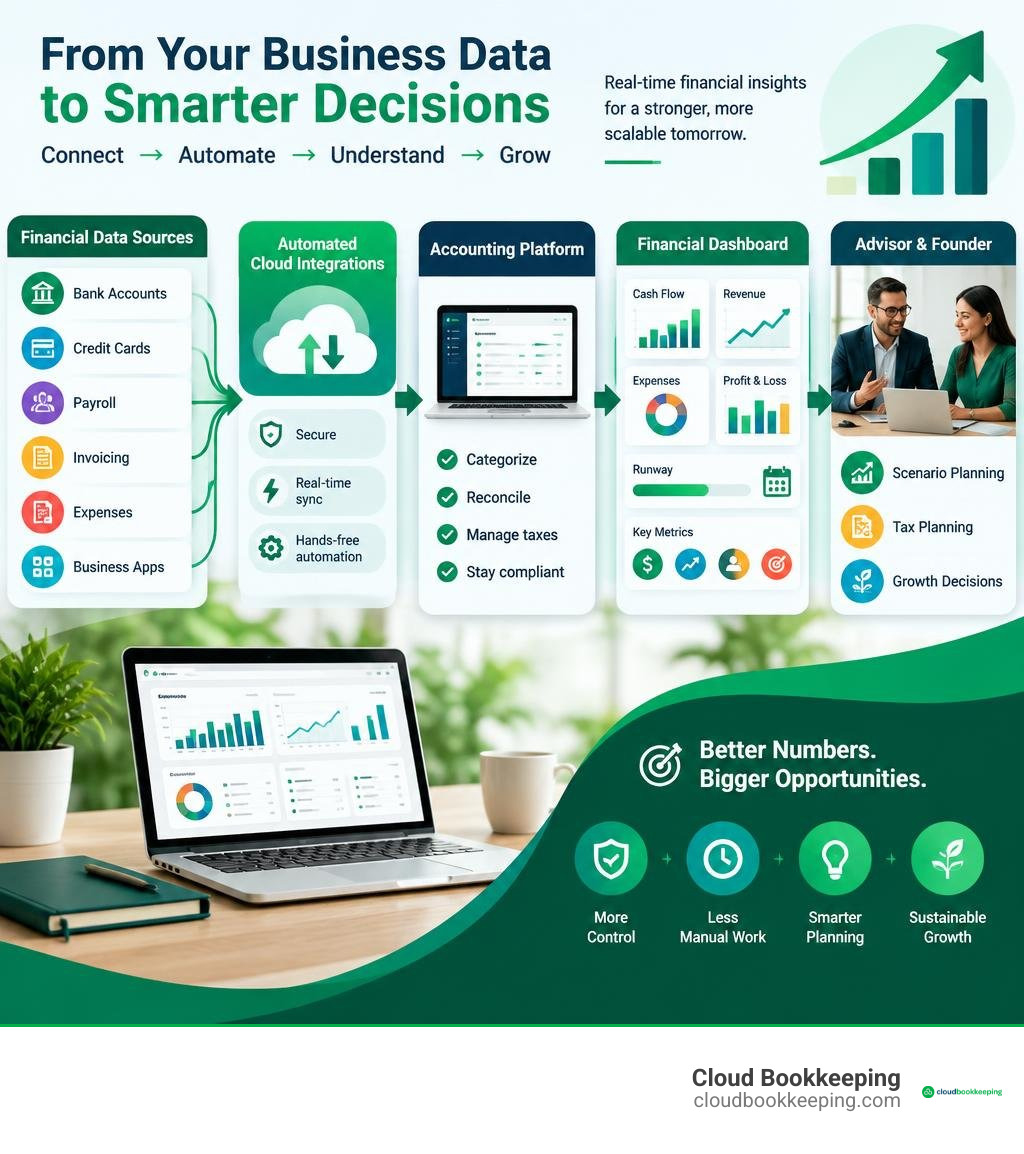
A great startup accountant does not just look backward to tell you what you spent; they look forward to help you plan where you are going. Beyond basic tax preparation, they provide high-value strategic services that help you scale safely and make financial management a practical priority.
- Cash Flow Forecasting & Runway Modeling: They help you build scenario models. Can you afford to hire two more developers next month? What happens to your runway if your sales cycle slows down by 30 days?
- Entity Structuring and Tax Elections: Many founders form an LLC but do not realize they can elect to be taxed as an S-Corporation. Once your startup’s profits reach a certain threshold (typically between $40,000 and $80,000), an S-Corp election can save you thousands of dollars annually in self-employment taxes. You can also review the IRS guidance on S corporation tax status to better understand the filing requirements before discussing the move with your accountant.
- R&D Tax Credits: If your startup is developing new software, hardware, or proprietary technology, you may qualify for federal and state Research and Development (R&D) tax credits, which can offset payroll taxes even if you are not yet profitable. The IRS also provides a helpful overview of the research credit for businesses that want to understand the basics before claiming it.
By establishing these systems early on, you can master the startup bookkeeping basics and unlock the true potential of bookkeeping for growth as a strategic weapon.
The Cost of Startup Accounting: Pricing Models and Budgeting
How much should you actually budget for these services?
Historically, accounting was dominated by hourly billing, which often made founders terrified to call their accountants for quick advice out of fear of receiving a surprise invoice. Today, the industry increasingly emphasizes clearer service arrangements and ongoing support. Cloud Bookkeeping’s accounting services can help startups pair reliable bookkeeping with the financial guidance they need as they grow.
- Hourly Rates: Hourly billing can work well for one-time needs, such as complex corporate restructuring, audit representation, or specialized advice. Ask upfront how time is tracked, what work is included, and how the firm will communicate before costs add up.
- Flat-Rate Monthly Packages: Many modern firms offer tiered monthly packages based on your revenue, transaction volume, or business complexity. This model gives you more predictable monthly expenses and encourages ongoing financial support.
To keep your overhead low, consider dedicated bookkeeping support for day-to-day financial tracking. Small business owners can save up to 50% compared to the cost of a typical traditional accountant by using dedicated bookkeeping services for their daily ledger maintenance, saving CPAs for high-level tax filing and strategy.
If you are wondering when to take the leap, these signs you need to outsource can help you make a data-driven decision. Cloud Bookkeeping can help you choose service options that fit your current stage of growth.
Preparing for Your First Meeting and Switching Providers
Once you have selected your financial partner, you want to make the most of your first consultation. Do not show up empty-handed.
To set your new accountant up for success, prepare the following documents in advance:
- Your business formation documents (Articles of Organization, Operating Agreement)
- Your Federal Employer Identification Number (EIN) letter from the IRS
- Access to your current accounting software (or your historical spreadsheets)
- The last two years of business and personal tax returns (if applicable)
- Read-only third-party access to your business bank and credit card accounts
If you are already working with an accountant and feel like you are not getting the proactive support you deserve, do not let the fear of switching hold you back.
Many founders believe that switching accountants is a massive headache, but it is actually highly regulated and straightforward. Your current provider is professionally and legally mandated to return your financial records and books to you or your newly designated representative upon request.
To make the transition seamless, implement these practical bookkeeping tips to organize your current files, and let your new partner handle the heavy lifting of transitioning to cloud bookkeeping behind the scenes.
Frequently Asked Questions about Startup Accounting
Do I need an accountant if I already use QuickBooks?
Yes. QuickBooks is an incredible tool, but it is only as good as the data entered into it. Software cannot tell you if you are misclassifying transactions, missing local tax deductions, or structuring your owner draws incorrectly.
While bookkeeping software is an essential tool for any modern business, human oversight ensures your books are accurate, IRS-compliant, and optimized for tax savings.
How much cash runway should a tech startup maintain?
As a general rule of thumb, a healthy startup should maintain enough cash to cover at least three to six months of operating expenses. This runway protects you from unexpected market dips, delayed client payments, or sudden operational expenses.
Understanding your true burn rate and runway helps founders make more sustainable business decisions.
Can a startup accountant help with R&D tax credits?
Absolutely. In fact, identifying and claiming R&D tax credits is one of the most valuable services a startup accountant can provide. They will help you document your qualifying research activities, calculate your eligible expenses, and file the necessary forms to claim these valuable credits, significantly reducing your overall tax burden.
Conclusion
At the end of the day, you did not start your business to spend your weekends reconciling bank statements and worrying about tax compliance. You started it to build something incredible.
By partnering with the right small business start up accountant, you gain more than just clean financial records; you gain the peace of mind and strategic clarity you need to scale your business with confidence.
At Cloud Bookkeeping, we combine the power of modern cloud technology with the unparalleled customer service, clear reporting, and local San Antonio leadership of Charlie Perrin. We are here to handle the numbers so you can focus on leading your company.
Ready to build a stronger financial foundation for your startup? Explore our professional bookkeeping services today and schedule a consultation with our team.