GPS Tracking Software Gives Businesses Real-Time Visibility
GPS tracking software uses location data from vehicles, equipment, or mobile devices to show where assets are, where they have traveled, and what is happening in near real time. For a small business, the right platform can make dispatching, job verification, fuel control, maintenance planning, and driver safety easier to manage.
At a glance, GPS tracking software typically combines:
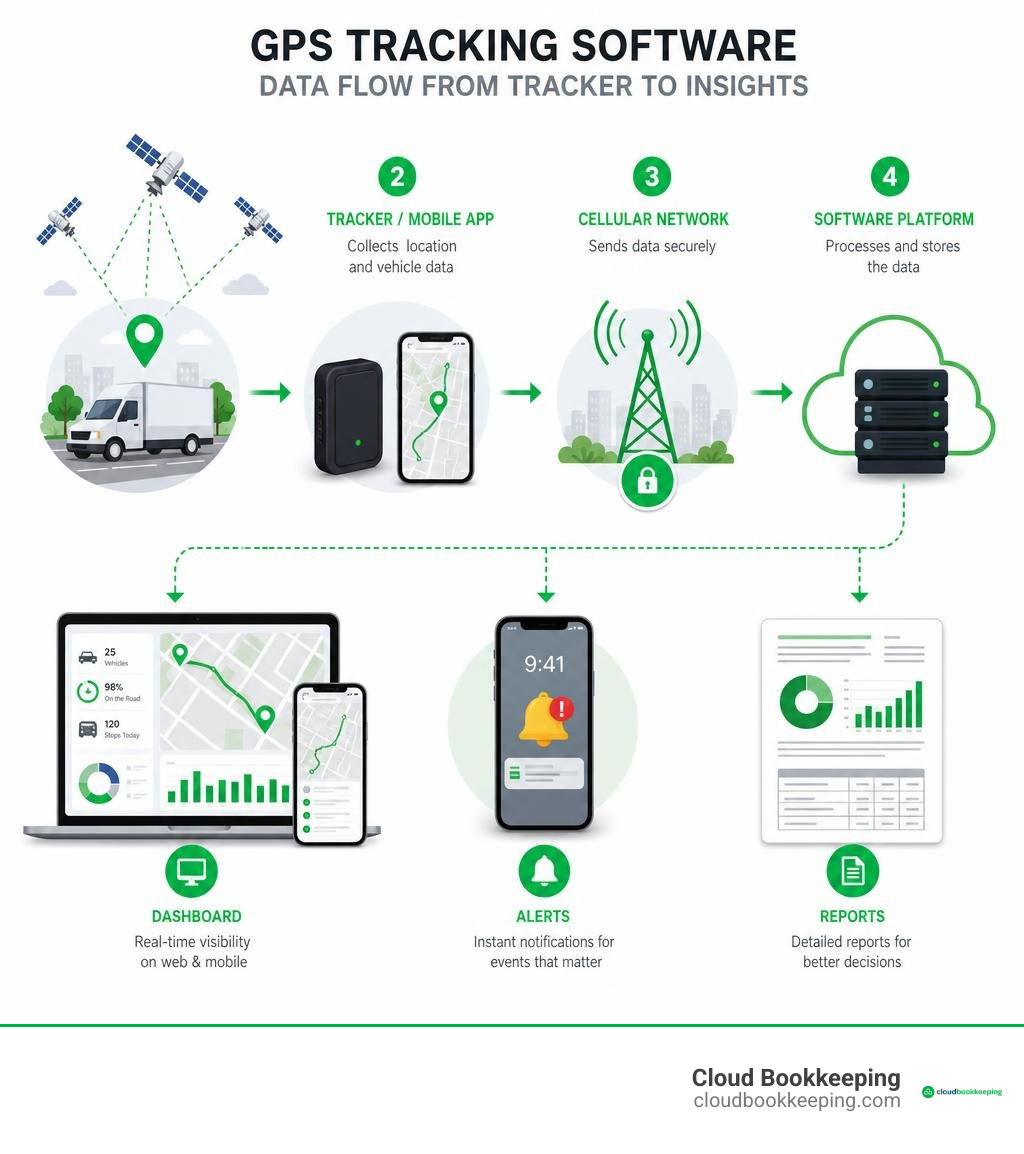
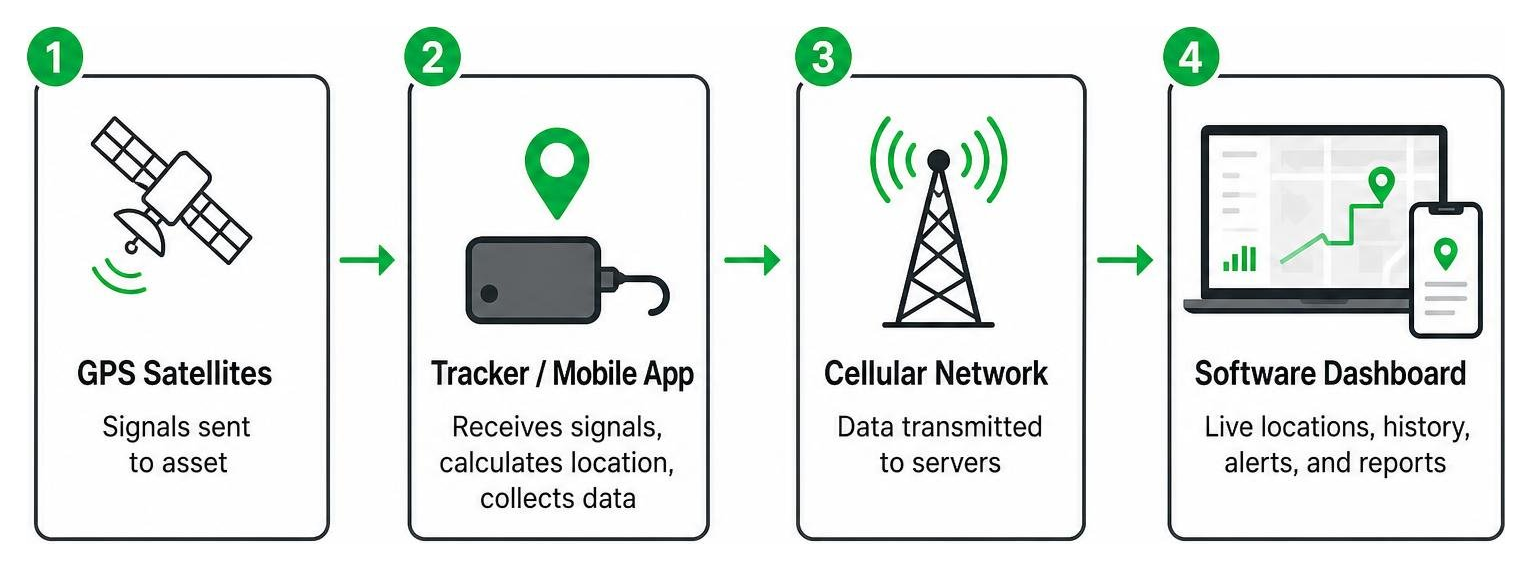
- GPS satellites to identify an asset’s location.
- A tracker or mobile app to collect location and vehicle data.
- Cellular networks to send that data to the software.
- Web and mobile dashboards where users can view maps, history, reports, and alerts.
The best option depends on what you need to track and how you plan to use the data. A field service company may value live technician locations and customer-site arrival records. A delivery business may need route history and speeding alerts. An equipment owner may prioritize theft alerts and geofences around job sites. Some platforms also connect with dashcams, fuel cards, maintenance tools, and ELD systems.
For business owners already working to gain control over costs and operations, location data is most useful when it becomes clear financial insight, not just another dashboard to check.
At Cloud Bookkeeping, our team helps small businesses build clearer systems, improve reporting, and make better decisions from operational data. In this guide, we will help you compare GPS tracking software with an eye on the features that can support stronger control of fleet and asset-related costs.
How GPS Tracking Technology Works and Who Benefits
Understanding how modern gps tracking software operates helps business owners choose a system that delivers reliable field visibility without overwhelming staff with unnecessary technical overhead.
How Location Tracking Functions Across Networks
At its core, telematics hardware calculates precise coordinates by receiving signals from global navigation satellites. Once an onboard tracking device or mobile app determines its position, it packages this telemetry, which may include speed, direction, engine diagnostics, and fuel levels, and transmits it across 4G LTE Cat-M1 or 5G cellular networks.
These data packets travel using dedicated TCP or UDP networking protocols straight to cloud servers or local software platforms. The server parses the telemetry and renders it on interactive mapping dashboards.
Depending on configuration, latency intervals can range from rapid updates every 5 to 10 seconds to periodic ping updates every few minutes for battery-powered equipment. Modern systems optimize network bandwidth so location details refresh quickly while maintaining server stability.
Primary Users and Operational Benefits
A wide range of organizations rely on gps tracking software to streamline day-to-day operations and improve cost controls:
- Commercial Fleets: Delivery services, freight carriers, and transport companies monitor active routes, track cargo status, and limit unnecessary engine idling.
- Field Service Technicians: HVAC, plumbing, electrical, and roofing contractors in San Antonio dispatch the nearest available technician to customer calls, lowering fuel consumption and shortening response times.
- Logistics Providers: Supply chain operators manage multi-stop schedules, eliminate unapproved detours, and verify accurate arrival and departure times for client billing.
- Equipment Rental Firms: Rental businesses track job-site positions, track engine operating hours for billing, and secure high-value machinery against theft.
- Personal & Family Trackers: Individual users monitor personal vehicles, teen drivers, or recreational equipment for added peace of mind.
Core Features of Modern GPS Tracking Software
When evaluating commercial tracking platforms, reviewing key features helps ensure the software aligns with your operational requirements.
Real-Time Mapping and Activity Playback
Live location mapping forms the foundation of any tracking dashboard. Leading platforms combine standard road views with satellite overlays, live traffic maps, and real-time weather radar to give dispatchers full operational context.
Equally important is activity playback. Top systems retain location history for 90 days or longer, allowing managers to replay past trips on an interactive map. This function makes it simple to verify completed service visits, resolve billing disputes with clients, and audit driver routes.
Dynamic Geofencing and Automated Alerts
Geofences are customizable virtual boundaries drawn around specific locations on a map, such as job sites, supply yards, or customer properties.
When a tracked vehicle or asset enters or exits a geofenced zone, the software automatically triggers instant alerts via mobile push notifications, email, or SMS. Specialized platforms also support dynamic geofencing, where safe boundaries move along with a mobile asset, such as an escort vehicle or school bus.
Customizable alerts notify business owners about key operational events:
- Excessive vehicle speeding or rapid acceleration.
- Unapproved after-hours asset movement.
- Sudden fuel drops indicating potential drainage or theft.
- Scheduled preventive vehicle maintenance milestones based on odometer readings or engine hours.
Hardware Compatibility and Installation Options
A major consideration when choosing gps tracking software is ensuring compatibility with your existing hardware or selecting the right tracking devices for your fleet.
Supported Tracking Devices and Mobile Conversion
Modern software platforms support hundreds of hardware protocol formats. Fleet operators can mix and match device types based on their budget and fleet composition:
- OBD-II Plug-in Trackers: Compact units that plug directly into a light-duty vehicle’s OBD port under the dashboard. They read vehicle diagnostic data and require no professional wiring.
- Hardwired GPS Devices: Installed directly behind the dashboard and connected to the vehicle’s ignition system. These trackers remain hidden, preventing unauthorized tampering or removal.
- Asset and Trailer Trackers: Ruggedized, weatherproof units with long battery life designed to track non-powered trailers, heavy machinery, and field equipment.
- Mobile App Transformation: Software apps can transform standard smartphones or tablets into functional GPS hardware devices without requiring extra hardware purchases.
Installation Processes and Device Configuration
Deployment difficulty varies depending on the chosen hardware:
- Plug-and-Play Setup: OBD-II trackers can be connected in under two minutes by non-technical staff.
- Hardwired Wiring: Requires connecting ground, constant power, and ignition-switched wires, taking roughly 20 to 30 minutes per commercial vehicle.
- Automated Setup: Advanced white-label platforms simplify device configuration by sending automated SMS setup commands directly to tracker SIM cards based on selected device profiles.
- Background Optimization: Mobile tracking apps require setting smart background permissions and battery optimization exceptions on mobile devices to prevent operating systems from pausing location updates.
Cost Reduction, Integrations, and Safety Management
Beyond basic location monitoring, robust gps tracking software serves as a practical cost-management tool for business owners.
Reducing Fuel Costs and Maintenance Expenses
Fuel expenses represent one of the largest operational costs for mobile fleets. Industry telematics research indicates that implementing GPS fleet tracking can help businesses lower overall fuel expenses. Fleet management software achieves these savings by identifying excessive engine idling, curbing unauthorized personal vehicle use, and highlighting inefficient driving routes.
Furthermore, direct connectivity to vehicle CAN bus systems provides real-time diagnostic trouble codes (DTCs) and automated maintenance reminders. Setting service triggers based on engine operating hours or mileage helps prevent major mechanical breakdowns, extend asset lifespans, and reduce repair expenses. Insurers may also offer policy discounts for commercial vehicles equipped with monitored GPS systems.
Driver Behavior Monitoring and Safety Tools
Improving fleet safety directly protects your financial performance by minimizing liability and wear and tear on assets.
Tracking systems log risky driving behaviors, including:
- Hard braking and sudden stops.
- Rapid acceleration and aggressive cornering.
- Speeding over posted street limits.
Fleet software compiles these metrics into driver safety scorecards and competitive leaderboards. Over time, that information can help managers coach safer driving habits, reduce preventable incidents, and control the hidden costs tied to vehicle misuse.
Tool Integrations with Dashcams, ELDs, and Fuel Cards
Integrating tracking data with complementary business platforms expands system capabilities:
- AI Dashcams: Dual-facing video cameras capture high-definition road events alongside GPS telemetry, providing clear visual evidence for legal and insurance disputes.
- ELD Compliance: Integrated Electronic Logging Devices ensure commercial drivers automatically comply with FMCSA Hours of Service (HOS) mandates.
- Fuel Card Auditing: Cross-referencing fuel card purchasing timestamps against exact GPS location coordinates prevents fuel card fraud or improper fill-ups.
- Enterprise Synchronization: Open API interfaces allow telematics data to stream directly into accounting, dispatch, CRM, and payroll software.
For companies that want cleaner cost records from connected tools, Cloud Bookkeeping can support software bookkeeping integrations that help turn fleet, dispatch, and operations data into useful financial reporting.
Essential integration options for modern fleet tracking include:
- Real-time AI video telematics and event clip storage.
- Automated driver login via RFID tags or iButton keys for accurate digital timecards.
- Direct synchronization with cloud bookkeeping and ERP platforms for streamlined expense logging.
Better operational data is only useful when it becomes easy to read and act on. Our team also helps business owners build clear bookkeeping service workflows so job costs, mileage, equipment expenses, and reporting routines stay organized as the business grows.
For additional planning context, the Cloud Bookkeeping article on easy financial reports explains how simpler reporting can help business owners monitor trends and make decisions with more confidence.
If your team is comparing software because remote work, mobile crews, or distributed operations are becoming harder to manage, our guide to using remote bookkeeping offers practical ideas for keeping financial processes coordinated without adding extra office overhead.
Comparing Business Models and Deployment Types
When evaluating gps tracking software, organizations must choose between commercial SaaS platforms, self-hosted open-source software, and white-label business frameworks.
Open-Source vs. Commercial GPS Tracking Software Options
Businesses with technical resources may evaluate open-source telematics solutions against proprietary subscription platforms.
Open-source platforms provide direct access to source code, total data privacy, and hosting freedom on local servers or cloud infrastructure. Tools like Traccar allow businesses to connect multi-vendor hardware protocols without recurring software fees. Similarly, self-hosted software such as Routario gives organizations full control over server locations and raw telemetry databases.
Conversely, commercial platforms provide managed maintenance, continuous software updates, uptime commitments, and dedicated customer support teams.
| Feature / Capability | Open-Source Platforms | Commercial SaaS Platforms |
|---|---|---|
| Data Privacy | Self-hosted local control | Hosted in vendor cloud data centers |
| Recurring Fees | No software licensing fees | Per-device monthly subscription |
| Hardware Compatibility | Open protocol support across many devices | Supported hardware vendor models |
| Technical Support | Community forums and manual maintenance | Dedicated customer assistance |
| Setup Complexity | Requires server administration | Turnkey browser-based onboarding |
Choosing White-Label GPS Tracking Software for Business Growth
For entrepreneurs looking to start their own telematics provider business, white-label GPS software provides a turnkey platform. White-label software allows companies to brand mapping portals, mobile apps, customer management platforms, and billing portals under their own corporate name and custom web domain.
Providers can customize customer portals, set up subscription tiers using built-in payment gateways, and grant client administrative access while relying on secure, vendor-managed server architecture.
Evaluating Pricing Models, Security, and Support
Finding the right software requires balancing contract flexibility, security standards, and operational support.
Subscription Tiers and Contract Flexibility
Software pricing structures vary across the telematics industry. Many commercial vendors charge a recurring monthly fee per tracked device, while others require long-term commitments.
When comparing providers, look for flexibility:
- Month-to-month service options with no cancellation penalties.
- Satisfaction guarantees.
- Hardware options that support existing third-party OBD trackers without forced hardware upgrades.
Data Privacy Protocols and System Support
Because location data reveals sensitive commercial routines, data security is critical. Ensure your tracking platform adheres to recognized security standards, such as ISO/IEC 27001 certification. Multi-tenant access controls should allow administrators to restrict visibility so staff members only see information relevant to their operational roles.
Finally, confirm the level of onboarding and support offered. Reliable vendors provide technical assistance, step-by-step setup assistance, and continuous platform training to keep your operations running smoothly. Structured cloud platforms can help maintain uptime while scaling across complex fleets.
Frequently Asked Questions about GPS Fleet Tracking
How frequently does GPS tracking software update asset locations?
Most commercial tracking systems update location data every 5 to 10 seconds during active travel. Battery-powered asset trackers or self-hosted software can be configured to ping at longer intervals, such as every 15 minutes or once per day, to preserve device battery life.
Can GPS tracking software track vehicles without internet access?
Yes. Tracking hardware continues collecting coordinates via GPS satellites even when cellular service drops. The device stores recorded data in internal memory and automatically uploads buffered history to the tracking server once cellular connection is restored.
What hardware options exist for tracking non-powered equipment?
Non-powered equipment, such as job-site trailers, dumpsters, and shipping containers, can be monitored using ruggedized, battery-powered asset trackers. These devices feature long-life internal batteries and weatherproof casings designed to withstand extreme field conditions.
Conclusion
Choosing the right gps tracking software gives your business full visibility into vehicle locations, driver safety, and operational costs. By comparing tracking features, hardware options, and deployment models, you can select a system that streamlines field dispatch and protects asset values.
At Cloud Bookkeeping, located in San Antonio, Texas, our team helps small businesses connect operational activity with sound financial management. We provide clear bookkeeping reporting, QuickBooks management, and advisory services so your field investments translate into bottom-line profitability. To connect operational tools with cleaner bookkeeping support, contact our GPS tracking software bookkeeping specialists.