Choose Ecommerce Inventory Software That Protects Sales and Cash Flow
Ecommerce inventory management software gives you one reliable view of what you have, where it is stored, what is committed to orders, and what is safe to sell. For a growing online business, the best options should:
- Sync stock across your store, marketplaces, warehouses, and 3PL partners in near real time
- Set safety-stock buffers and reorder alerts to prevent overselling and stockouts
- Track purchase orders, bundles, returns, lot numbers, and product costs
- Connect cleanly with your accounting system so inventory value and cost of goods sold stay accurate
Without this control, it is easy to sell stock that is not really available, tie up cash in slow-moving items, or discover too late that a best seller is running out. Spreadsheets can work for a small catalog, but manual updates become risky once orders, locations, and sales channels start multiplying.
The right platform turns inventory from a daily guessing game into a useful financial signal. It helps you buy with more confidence, protect customer experience, and see the true margin behind every sale.
I am Charlie Perrin, founder of Cloud Bookkeeping, with more than 24 years of experience helping small businesses build clearer financial systems and improve profitability. In this guide, I will explain how ecommerce inventory management software can support cleaner books, better cash-flow decisions, and more sustainable growth.
Ecommerce inventory management software basics:
What Is Ecommerce Inventory Management Software and Why It Matters
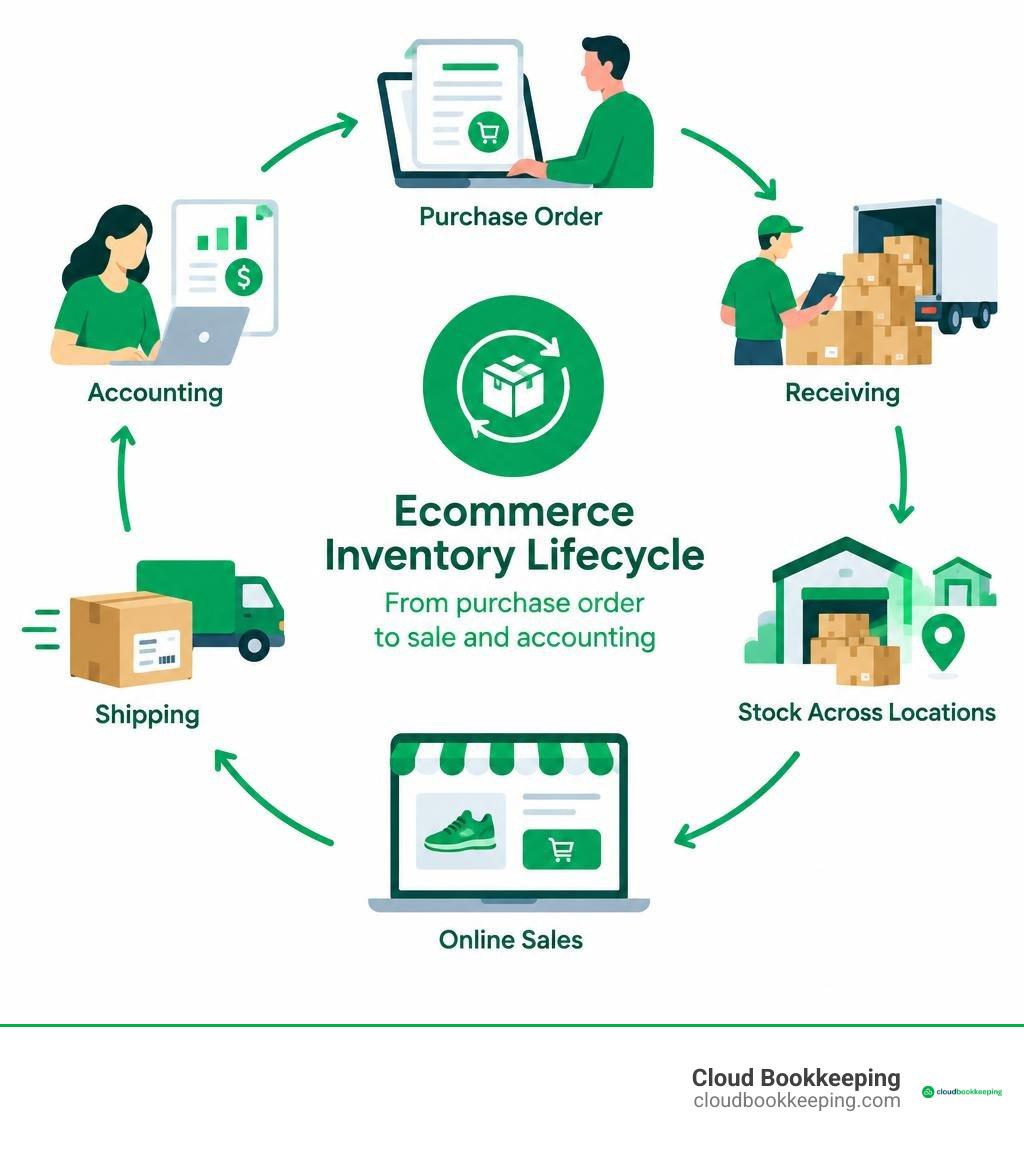
Ecommerce inventory management software is a dedicated digital solution that continuously records stock movements, balances supply with incoming demand, and orchestrates fulfillment across distributed sales channels. In modern retail, your stock is rarely sitting in a single stockroom behind a cash register. It lives across third-party logistics (3PL) warehouses, dropship partners, physical storefronts, Amazon FBA facilities, and regional storage hubs.
Without centralized software, keeping track of sellable units becomes an operational headache. Leading platforms maintain perpetual inventory records by using event-driven architecture to deduct stock the split second a shopper clicks “Buy Now” on Shopify, Amazon, eBay, or Walmart. This real-time inventory tracking replaces guesswork with absolute operational certainty, ensuring product availability is accurate across every consumer touchpoint.
Modern platforms also incorporate intelligent stock allocation rules. When an order lands, the software evaluates the customer’s shipping address against available inventory locations, routing the order to the nearest facility to reduce transit times and lower shipping costs. Selecting the right modern software stack creates an operational backbone that protects your brand reputation, prevents stockouts, and preserves working capital. For a comprehensive look at current industry solutions, review this ecommerce inventory management software overview.
Perpetual vs. Periodic Systems in Modern Ecommerce
For decades, traditional merchants relied on periodic inventory systems. Under a periodic framework, businesses physically count stock at predetermined intervals, such as weekly, monthly, or quarterly, and calculate Cost of Goods Sold (COGS) retrospectively using the formula:
$$\text{Beginning Inventory} + \text{Purchases} – \text{Ending Inventory} = \text{COGS}$$
While periodic tracking worked when orders were processed across a single counter, it fails completely in high-velocity multichannel ecommerce. If an unexpected sales surge occurs mid-month, a periodic system leaves you blind to depleting stock until the next physical count, virtually guaranteeing stockouts and overselling.
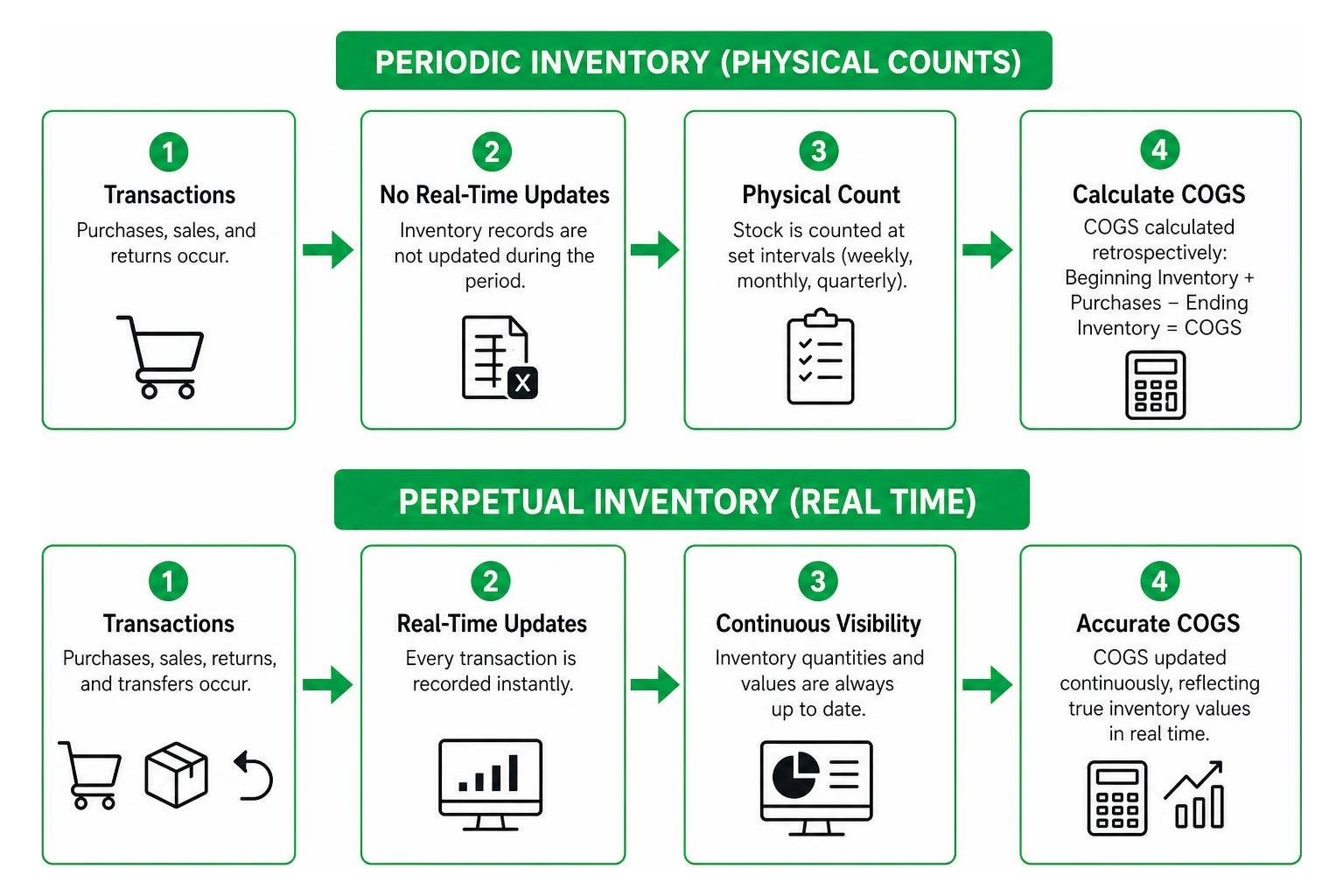
In contrast, a perpetual inventory system continuously records every transaction in real time. Barcode scans at receiving, picking confirmations, returns processing, and online checkouts immediately adjust unit counts and balance sheet valuations. Perpetual tracking unlocks rolling cycle counting, regularly counting small subsets of SKUs without shutting down fulfillment operations. This approach ensures financial records reflect true asset values while highlighting the strategic role of accounting software solutions in keeping operational data aligned with general ledger balances.
The Operational Cost of Spreadsheets and Manual Tracking
Many founders start managing inventory on spreadsheets. While Excel or Google Sheets may feel cost-effective at first, manual tracking introduces hidden costs as order volumes increase:
- Human Error & Data Gaps: Manual data entry carries an inevitable error rate. A mistyped SKU or an unrecorded return creates “phantom inventory,” causing you to list items you don’t actually own.
- Margin Leakage: Spreadsheets struggle to capture fluctuating freight, customs tariffs, and warehouse handling fees. As a result, product margins are often calculated on estimates rather than true landed costs.
- Marketplace Suspensions: Major marketplaces enforce strict order defect rate (ODR) and pre-fulfillment cancellation metrics. Overselling due to spreadsheet latency can trigger account suspensions on Amazon or Walmart, halting revenue overnight.
- Labor Overhead: Operations teams often spend upwards of 4 to 10 hours per week manually updating inventory levels across disparate channels: time better spent optimizing supplier terms or expanding product lines.
Essential Features of Leading Inventory Management Platforms

Investing in a dedicated platform should simplify your operational workflow rather than complicate it. When evaluating top-tier inventory software, look for features that combine granular visibility with process automation.
Real-Time Multichannel Synchronization and Buffer Rules
The primary requirement of any multichannel platform is near-zero-latency synchronization. Leading systems process inventory adjustments across all connected channels in under 5 seconds using direct API webhooks.
To protect against marketplace latency during flash sales or peak holiday periods, advanced platforms allow you to set dynamic buffer rules:
- Safety Stock Buffers: Reserve a specific number of units (e.g., 5 units) that remain hidden from public listings to absorb simultaneous orders.
- Channel-Specific Allocation: Allocate defined quantities of high-demand SKUs to specific channels, ensuring priority platforms stay in stock.
- Automated Stock Locking: The moment a customer initiates checkout or completes a purchase, the system locks that unit across all other integrated stores, eliminating double-selling.
AI-Driven Demand Forecasting and Automated Purchase Orders
Reactive inventory replenishment leads to either stockouts or bloated warehouses. Modern platforms feature AI-driven demand forecasting that analyzes historical sales velocity, seasonal trends, marketing promotions, supplier lead times, and regional buying behaviors to predict demand up to 90 days in advance.
When inventory approaches calculated reorder points, the software can automatically draft purchase orders (POs) tailored to vendor-specific constraints, including minimum order quantities (MOQs), casepack sizes, and tiered volume discounts. Integrating these inventory forecasts with your financial projections helps ensure your purchasing plans match available working capital. To dive deeper into planning methods, check out our guide to financial forecasting and projections.
Managing Kits, Bundles, and Lot Traceability
Selling complex products introduces inventory challenges that basic storefronts cannot handle natively:
- Virtual Bundles & Kitting: If you sell a gift basket containing three standalone SKUs, the software tracks individual components in real time. When one item sells out individually, the bundle listing automatically updates to show zero available stock.
- Multi-Level Bill of Materials (BOM): For brands that assemble finished goods from raw materials, the system tracks component stock, scrap percentages, and assembly labor, rolling those expenses directly into the finished unit cost.
- Batch & Lot Traceability: For brands selling cosmetics, supplements, or perishables, lot and serial tracking records expiration dates and batch IDs from receipt through fulfillment. This enables First-Expired, First-Out (FEFO) picking workflows and provides clear audit trails for regulatory compliance.
Financial Precision: Landed Costs, COGS, and Accounting Integrations

Inventory control is fundamentally a financial discipline. Every SKU sitting in a warehouse represents working capital. Without accurate cost accounting, your profit-and-loss statement will not reflect your true business performance.
Calculating Accurate Cost of Goods Sold and True Margin
Determining the exact cost of inventory requires more than just tracking the supplier’s unit purchase price. True profitability relies on calculating landed cost, which incorporates all auxiliary expenses required to get a product into your fulfillment center:
$$\text{Landed Cost} = \text{Ex-Works Unit Price} + \text{Ocean/Air Freight} + \text{Customs & Tariffs} + \text{Insurance} + \text{Drayage & Port Handling}$$
Leading platforms automatically allocate these inbound freight and duty costs across individual items: either by weight, volume, or value. By calculating a rolling average landed cost, your business can track Cost of Goods Sold accurately upon every sale, avoiding unpleasant margin surprises at tax time. To keep operational spending organized alongside your inventory costs, explore our review of software for keeping track of business expenses.
Integrating with ERP, WMS, and General Ledger Systems
Inventory software should not operate in an isolated silo. It must maintain a continuous, two-way sync with your core accounting platform, Warehouse Management System (WMS), and Enterprise Resource Planning (ERP) tools.
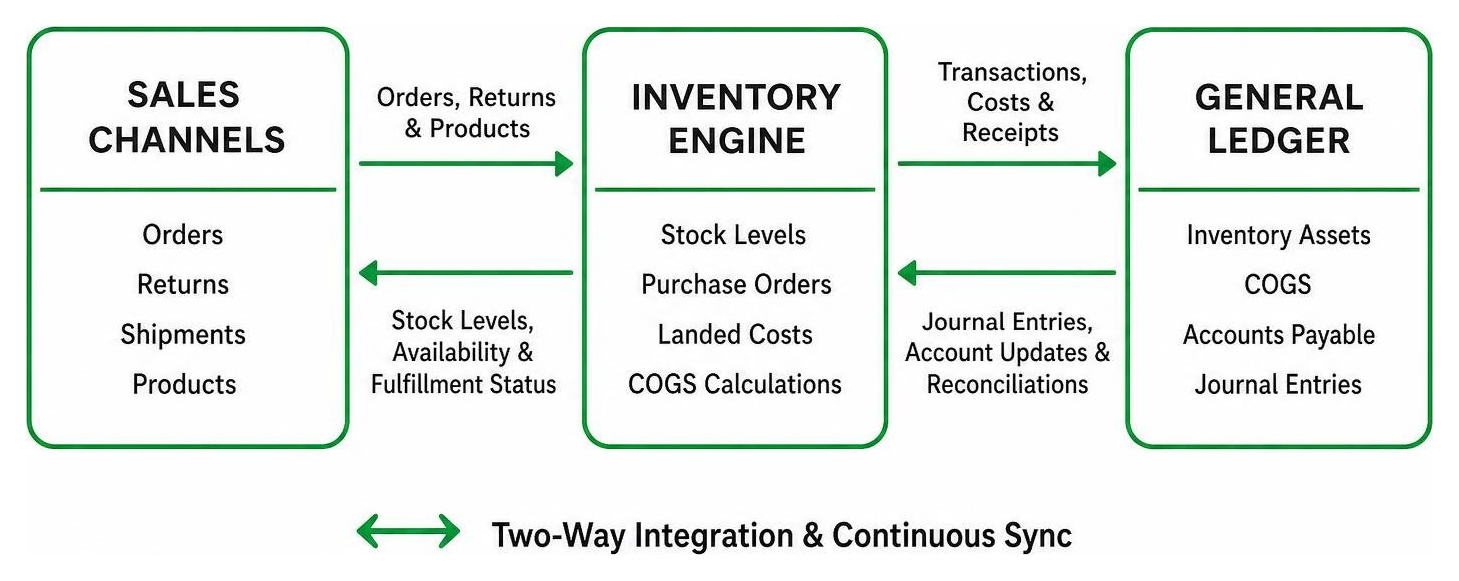
When an order ships or a vendor bill is reconciled, the inventory engine automatically posts corresponding journal entries to your general ledger:
- Inventory Asset Accounts are credited as goods depart.
- COGS Accounts are debited based on the specific valuation method used (e.g., Weighted Average Cost or FIFO).
- Accounts Payable balances update automatically when PO receipts match supplier invoices.
This seamless data flow eliminates manual end-of-month reconciliations and ensures clean, audit-ready balance sheets. For practical advice on selecting software that supports these workflows, read our recommendations on choosing a web-based accounting system.
Evaluating Costs, Pricing Models, and Return on Investment
Selecting an inventory management solution requires evaluating software subscription structures against the financial returns gained from efficiency, reduced carrying costs, and fewer lost sales.
| Pricing Model | Best Suited For | Key Advantages | Potential Drawbacks |
|---|---|---|---|
| Per-User Licensing | Small-to-midsize teams with steady staff counts | Predictable monthly overhead; simple scaling per seat | Costs scale quickly as warehouse and admin teams grow |
| Order-Volume Tiers | Businesses with high SKU counts but fluctuating sales | Low base fees during off-peak seasons; aligned with revenue | Sudden billing spikes during holiday sales surges |
| SKU-Based Pricing | Brands with focused, fast-moving catalogs | Unlimited users and order processing volume | Expensive for broad catalogs with slow inventory turnover |
| Enterprise Platform | High-growth brands needing advanced WMS/ERP logic | Custom workflows, dedicated support, unlimited volume | Substantial implementation timelines and setup commitments |
Understanding License Tiers in Ecommerce Inventory Management Software
Software providers structure their plans around various operational metrics:
- User Seats: Monthly plans often differentiate between administrative users, warehouse staff, and view-only accounts.
- Transaction Caps: Tiered packages often include monthly order thresholds (e.g., up to 5,000 orders/month), with overage fees applied to additional volume.
- Add-On Modules: Advanced capabilities, such as multi-level BOMs, B2B wholesale portals, EDI retail compliance, and custom API access, may require higher-tier subscriptions.
- Implementation & Onboarding: Many mid-market and enterprise platforms charge onboarding fees for database migration, hardware configuration, and workflow setup.
For early-stage ecommerce brands, adopting tools designed to simplify startup bookkeeping operations provides a clean financial baseline before layering on complex enterprise inventory software.
Selecting the Right Ecommerce Inventory Management Software for Scalability
To ensure your software investment supports long-term growth, evaluate platforms against these operational requirements:
- Catalog & Channel Compatibility: Confirm the software integrates natively with your existing shopping carts, marketplaces, and EDI trading partners without requiring costly middleware.
- 3PL & Multi-Warehouse Routing: Ensure the platform handles split-shipments, warehouse transfers, and automated order routing across distributed fulfillment networks.
- System Reliability & SLA: Verify the vendor guarantees high platform uptime (such as a 99.9% uptime SLA) to prevent data synchronization delays during major sales events.
- Audit Trail & User Permissions: Maintain tight internal controls with role-based access permissions and full logging of every stock adjustment, count override, and purchase order edit.
Frequently Asked Questions About Ecommerce Inventory Systems
How does inventory software prevent overselling across multiple sales channels?
The software acts as the single source of truth for your stock. When an item sells on one channel (such as your Shopify store), the platform locks that stock immediately and pushes an updated available count to all other connected channels (like Amazon and Walmart) in under 5 seconds. By using real-time API sync and customizable safety stock buffers, the system prevents multiple customers from purchasing the last available unit simultaneously.
What is the expected ROI timeline after software implementation?
Most growing ecommerce businesses see a positive return on investment within 3 to 6 months. ROI comes from several key operational improvements:
- Labor Savings: Eliminating manual spreadsheet reconciliation saves 15 to 20+ hours of administrative work each week.
- Carrying Cost Reductions: Preventing overstocking can lower holding costs by 15% to 30%.
- Revenue Protection: Eliminating stockouts and overselling penalties protects marketplace seller ratings and prevents lost sales.
How do inventory platforms handle multi-location fulfillment and 3PL networks?
Modern platforms centralize stock visibility across unlimited physical locations, including your own warehouses, Amazon FBA centers, and third-party logistics providers. When orders are received, intelligent routing rules evaluate inventory availability, customer location, and shipping rates to assign fulfillment to the optimal facility.
For brands scaling operations in Central Texas, integrating software with regional fulfillment partners, such as a top-tier San Antonio 3PL fulfillment center or an established San Antonio 3PL warehouse, helps ensure local orders are picked, packed, and delivered efficiently.
Conclusion
Scaling an ecommerce brand requires moving past manual spreadsheets and disconnected systems. Implementing dedicated inventory management software protects your cash flow, safeguards marketplace seller metrics, and provides the real-time visibility needed to make confident purchasing decisions.
At Cloud Bookkeeping, led locally in San Antonio by Charlie Perrin, we help growing businesses integrate their operational platforms with reliable accounting systems. When your inventory tracking, landed costs, and general ledger work together seamlessly, you gain the financial clarity needed to grow sustainably.
Explore our curated selection of software solutions to find tools that will keep your virtual shelves stocked, protect your margins, and streamline your business operations.